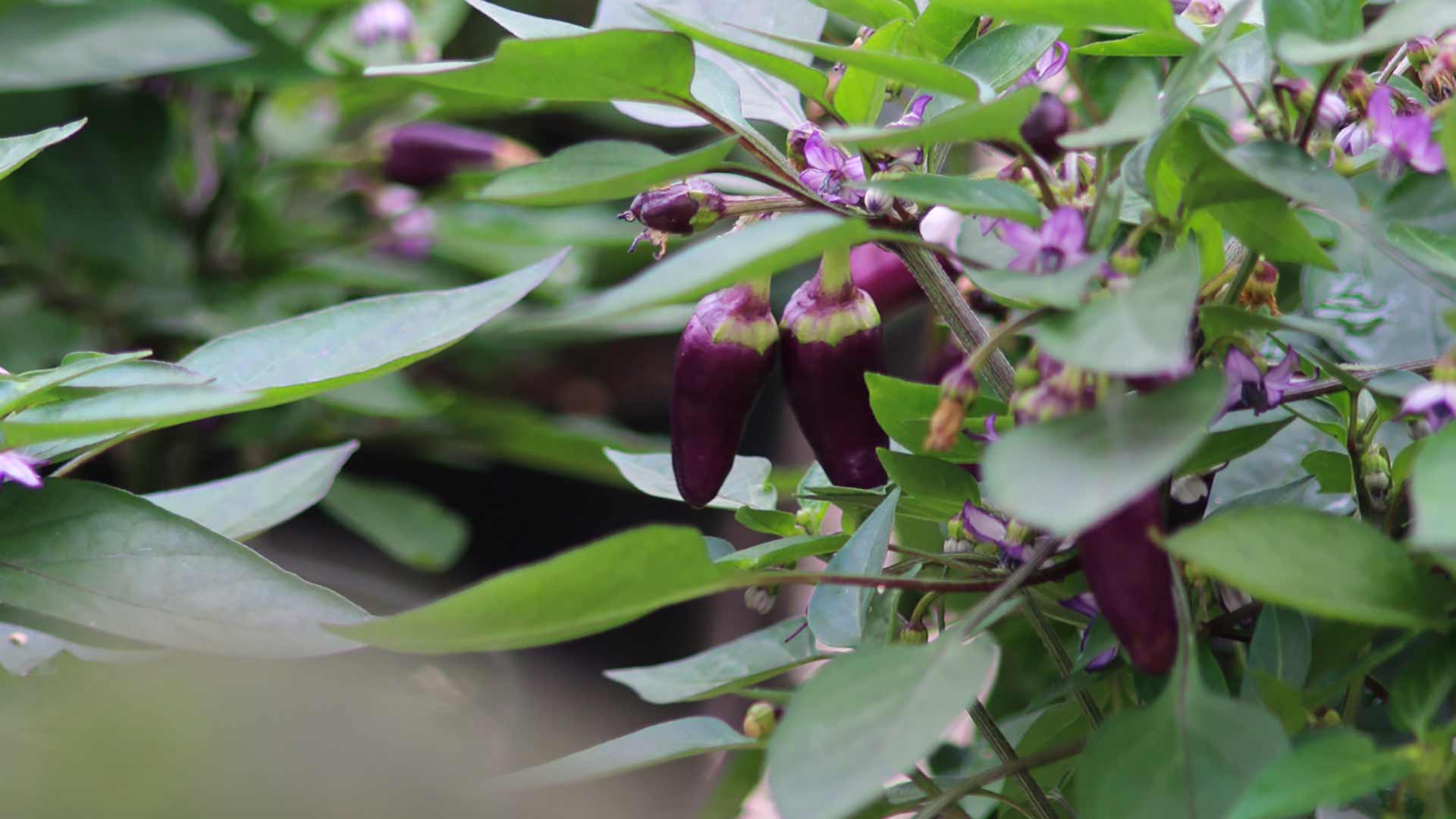
Want to get the most bang out of your gardening buck? Then give your plants some simple mid-summer love!
With a little luck, our flowers and veggie gardens are coming into their own as we approach the middle of the summer growing season. But if you want to hang on to this momentum, listen up! Now is not the time to switch on your gardening auto-pilot. Just a little time and energy spent on basic maintenance can help plants throughout your landscape perform at the top of their game.
Read on!
Love your flowers, but know when to let them go
So much of our summertime gardening focuses on the flowers… the beautiful blossoms that make it all worthwhile. But once those blossoms are past their prime, it’s time to let them go, with a clean quick “snip.”
Removing the fading flowers is called “deadheading.” It can make a big difference in how well and how long our flowering plants continue to put on their show. When we cut off the fading flowers, we save the energy the plant would have used to make seed and prompt it to make more flowers instead because it still needs to accomplish its “mission” or reproducing. Ta da! When we remove the old flowers we get more new ones. It’s a great deal!
Is a little mid-summer facelift in order?
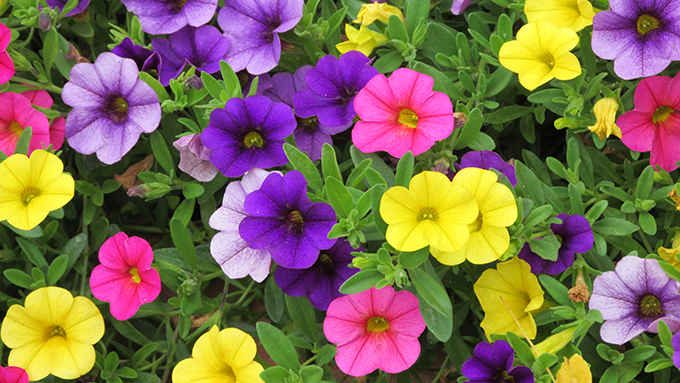
Don’t be afraid to replace any failing annuals with fresh, new faces. Some flowers like pansies don’t like our hot summer temperatures. They just shut down. I’m seeing some small grasses that I planted in the large pots on my deck looking pretty puny, so out they go! Instead of pulling them out and risking damage to the roots of their neighboring flowers, I take an old serrated steak knife and cut them out. I got some beautiful free-flowering callibrachoa that I’ll tuck into the empty spots and the containers will be off and running! Easy breezy fix. Tagawa Gardens carries a wide assortment of container-friendly annuals well into the summer.
A little tomato tune-up
We can’t overlook the darling of our vegetable garden. Here are two mid-summer maintenance tips I highly recommend. First, make sure you’re giving your plants good deep drinks. With our hot daytime temperatures and drying winds, it doesn’t take long at all for large, leafy plants to use all of the moisture around their roots. We end up with lots of tomatoes with a common problem called blossom end rot… large parchment-like patches on the base of the fruits. Most cases of blossom end rot can be avoided with consistent watering. A two-inch layer of organic mulch around the base of the plants is also extremely helpful in conserving that precious moisture. I wouldn’t grow tomatoes without it.
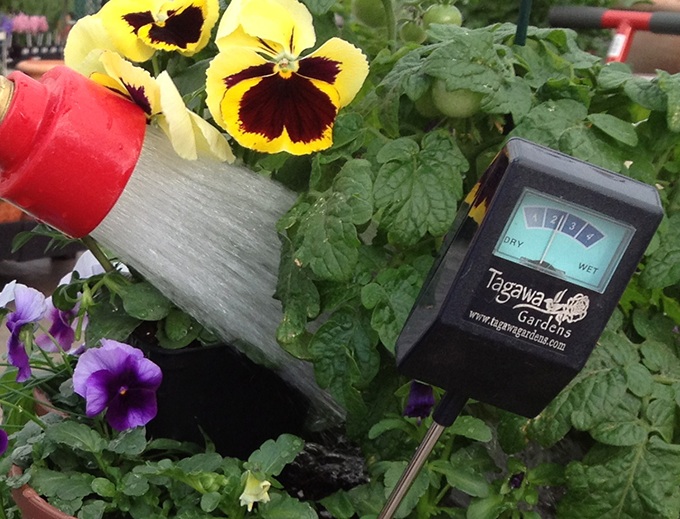
Any plants may need some extra moisture during hot spells in the summer—a moisture meter is a great tool to help! And see below for our How To Videos about watering your annuals in summer, and your trees and shrubs during dry periods or anytime
My other tomato tip: trim off those bottom branches. Once a tomato plant has a good bit of foliage, consider removing the lowest branches. A lot of tomato diseases are spread by water that hits the soil and then splashes onto the lowest leaves. Cutting off the lowest branches that have leaves within eight inches of the ground is no guarantee your plants won’t get a disease, but it can definitely help.
And for the perennials? Fluffing and deadheading
Not everyone mulches their perennial beds, but I’m convinced if makes my gardens healthier and my life easier. Mid-summer is a great time to get out a rake and groom your mulch a bit… making sure it’s evenly distributed so it can do its job of conserving moisture and deterring weeds. I go for a minimum of two inches of mulch in my perennial beds. When it starts to thin out, I add more. Tagawa’s has a great selection of different types of mulch that will help keep you plants’ roots happy.
Deadheading perennials is just as important as deadheading annuals. Again, removing the blossoms = keep the plants from producing seed = getting more flowers. I especially enjoy deadheading in the cool of the evening. Give me some sharp clean scissors or pruners and a bucket to hold the trimmings, and I’m in for a very pleasant time.
Our lawns need us!
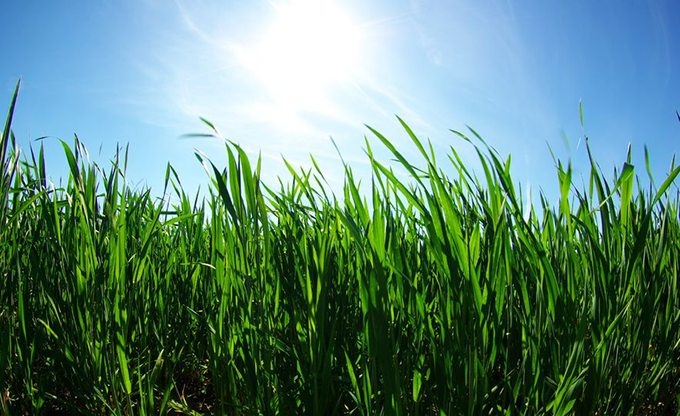
Don’t think of the grass in your backyard as just a lawn. Think of it as a bazillion little individual grass plants. Like all of the plants we grow along the Front Range, these tiny plants will do much better if they’re watered properly. That means they don’t want sips of water. They want big, deep drinks!
If you don’t know how much water you’re giving your lawn (and most people don’t…), find out. Set a few shallow straight-sided cans out on your grass. Tuna cans, cat food cans… that kind of thing. Water your lawn as you normally do, then see how much water you’ve actually given your grass.
Ideally, you need to give your lawn enough water to soak down at least four inches, a bit more is even better. Deep, thorough watering can help those little grass plants survive the kind of sizzling temperatures Mother Nature is giving us this time of year. Deep, less frequent watering is infinitely more helpful for your lawn than lots of little superficial sips, and it can actually save your money on your water bill.
And don’t you just hate dull scissors?
Think of your lawnmower as scissors. If you aren’t changing or sharpening the blade on your mower at least a few times every summer, you’re letting your lawn down. A clean even cut on the tops of the grass blades will look better, and keep your lawn healthier in the process. Now get to work! Your plants need you!
Learn More…
Watering Techniques for Gardening Success
Learn how to water hanging baskets and container gardens for best success!
How to Water Trees and Shrubs, during Drought or anytime
Learn how to water how to water trees efficiently during drought or anytime!
Acclimating and Deadheading Annuals and Other Plants
Plants grown in a greenhouse need to be acclimated or “hardened off” to the great outdoors before planting them in their final location outside. Also learn about “deadheading” –removing spent flowers to get plants to bloom longer!